

Exploring the future in the Faroe Islands
On June 2nd we gathered at Hotel Tórshavn for an open workshop hosted by Folke. Around 16 people joined us for the day – partners in the project, local residents, and curious visitors — to explore the future through conversation, hands-on exercises, and group sessions.
First reflections
We opened with a short presentation about Folke and Northern Futures Hub, followed by presentations about FabLab Kambsdalur and Nordic Atlantic cooperation (NORA) and their work. We then jumped straight into an ice breaker exercise led by Lizzie Bird. The task was simple: participants were given a series of statements, for example “the future feels exciting to me”, and asked to place themselves in the room according to whether they agreed, were unsure or disagreed.
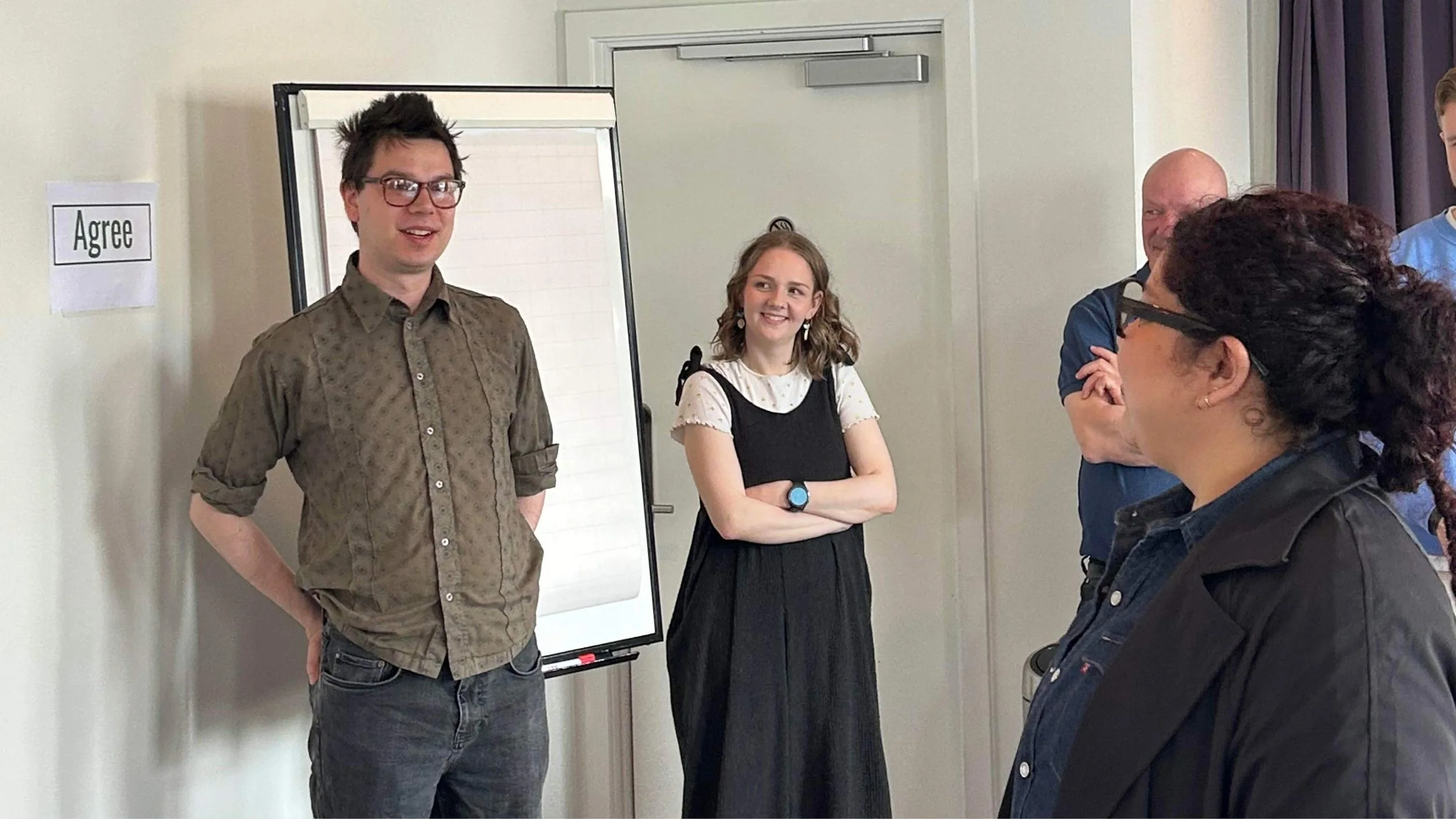
"School/work prepared me well for change”. In the icebreaker participants responded to different statements. (Photo: Folke)
The real value of the exercise was in the conversations that followed. People who placed themselves at opposite ends of the room talked through why they felt the way they did. Life stage, occupation, recent experiences, and local context shaped perceptions in surprising ways. The ice breaker set the tone for the day: this is about listening as much as proposing solutions, and about recognising how different circumstances shape what people imagine as a viable future.
Voluntourism and “Closed for Maintenance”
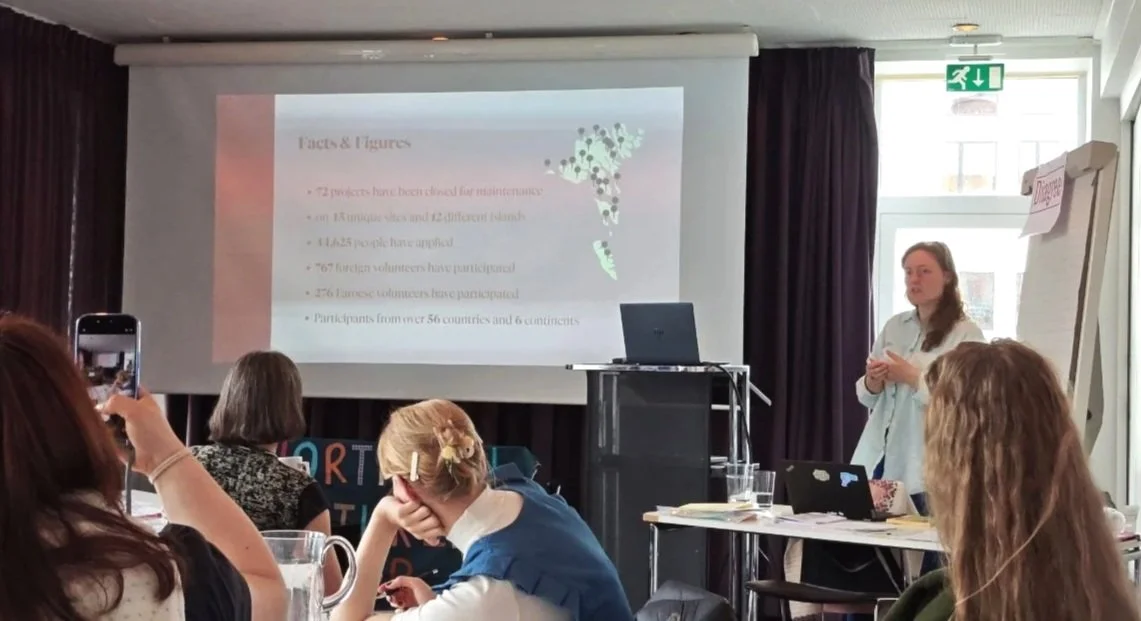
Visit Faroe Islands came and presented their ongoing “Closed for Maintenance” project, where tourists are invited to take part in practical conservation and maintenance across the islands, an approach that reframes tourism from extraction to contribution.
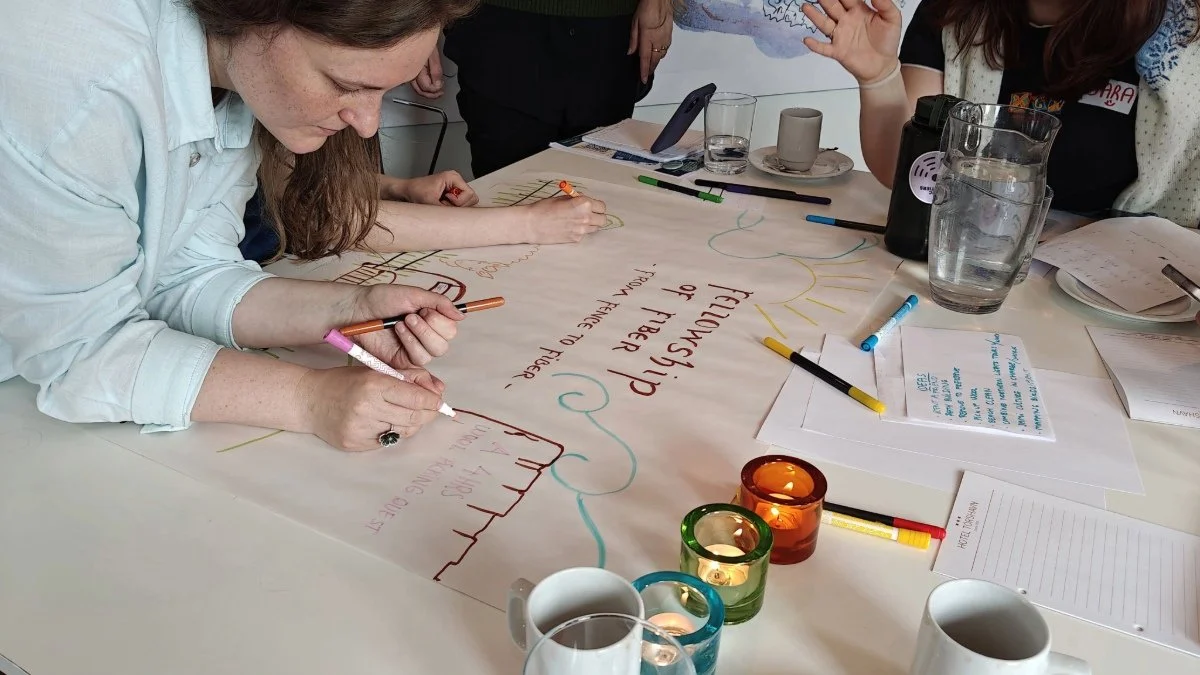
Inspired by this model, participants worked in groups to design their own voluntourism projects. The ideas were creative, local, and rooted in community needs: wool-gathering to reduce accidental damage to birds, a garden project that connected seasonal workers, tourists, and residents, and a food exchange festival. Groups discussed logistics, motivations for participation, and how to ensure local benefit. The session shifted the frame: instead of focusing on problems, participants explored how tourism can be a resource for conservation, skills-sharing, and cross-cultural exchange.
AI: excitement, risk, and human-centered design
Artificial intelligence was another topic. The session, led by Pietro Randine, began with open questions about attitudes toward AI and then moved into a light-hearted but revealing quiz: participants tested their ability to distinguish between human-created and AI-generated content. The activity quickly revealed both impressive AI capabilities and surprising blind spots in our ability to tell human and machine outputs apart.
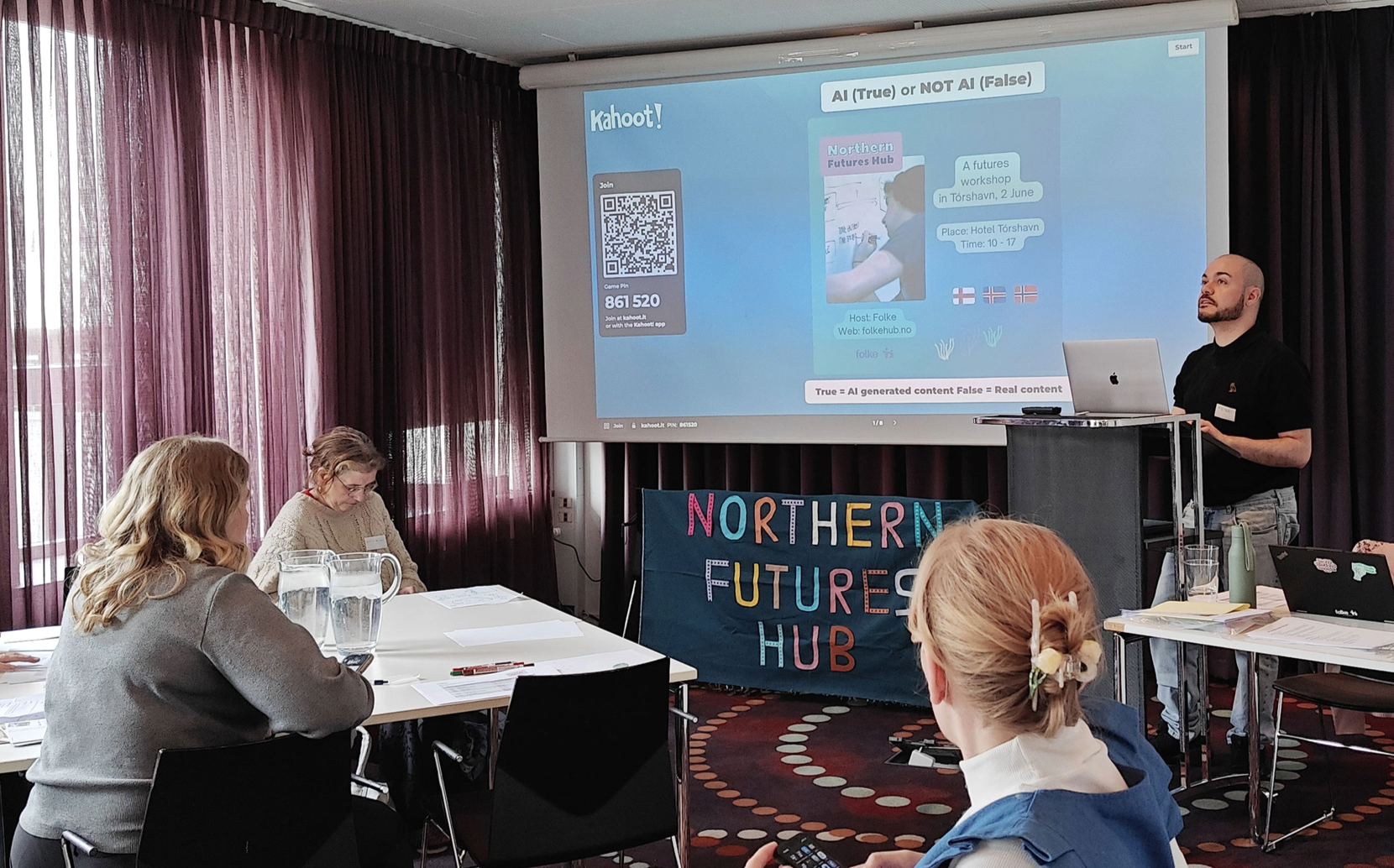
From there the discussion broadened. We explored how generative AI works, and how training data and model design can embed biases and reproduce stereotypes, often to the detriment of minority voices. Conversations moved between enthusiasm for the possibilities and deeper concerns.
Work and ageism
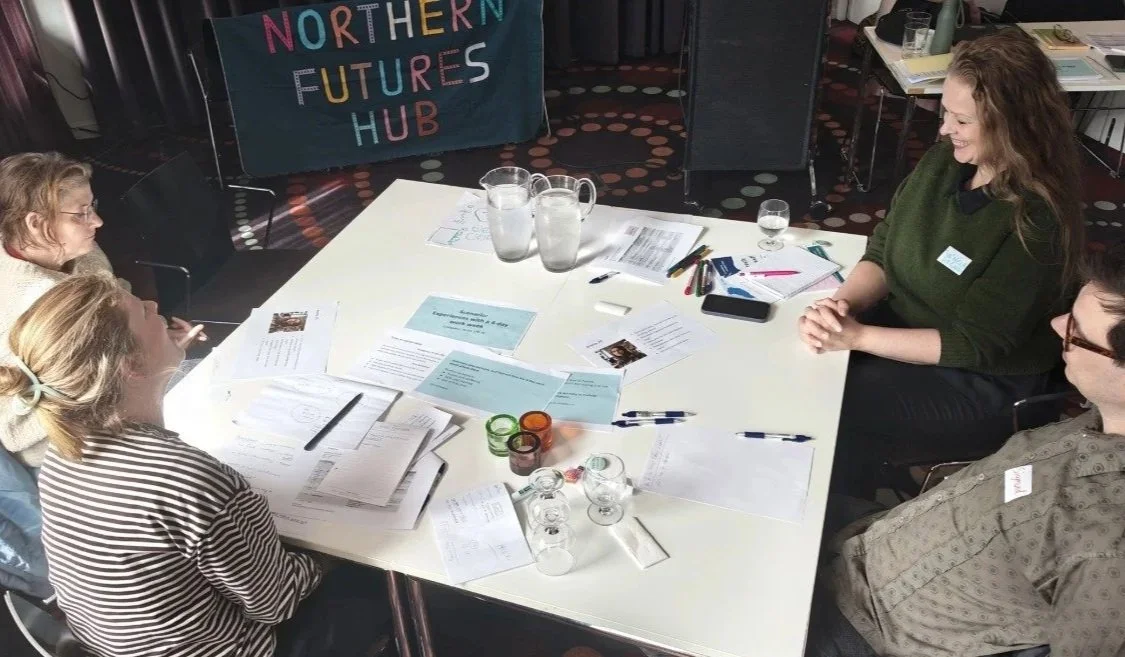
We also explored the future of work through a four-day workweek scenario exercise: participants received fictional personas and imagined how reduced working hours might affect wellbeing, family life and community involvement.
The exercise highlighted how one policy change can have very different outcomes depending on age, caregiving responsibilities, and employment type.
To close the day, Dögg Sigmarsdóttir and Nílsína Einarsdóttir from Iceland led a workshop on ageism, building on work presented earlier in Reykjavik. Through activities and group reflection, people considered how age-based assumptions hurt both younger and older people, and discussed practical steps to reduce stereotyping in workplaces, services, and everyday interactions.
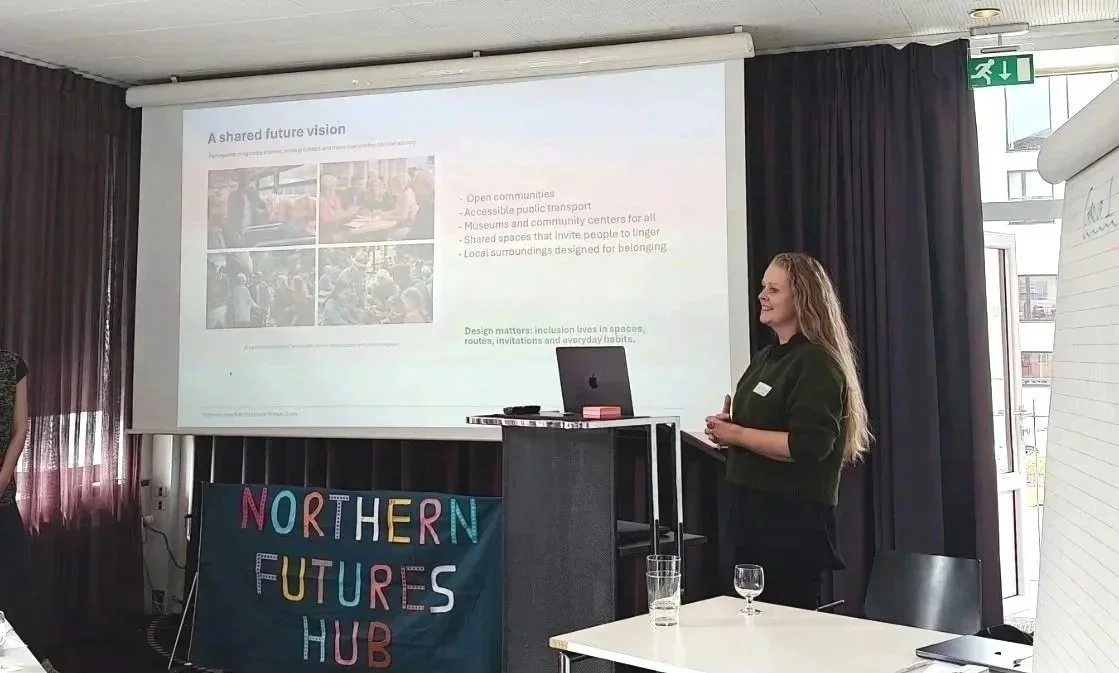
Nílsína Einarsdóttir. (Photo: Folke)
The workshop brought together people of many ages, backgrounds, and nationalities. The energy of the day wasn’t only in the sessions themselves, but in the conversations that continued long after each exercise ended. People left with new perspectives, practical ideas, and a stronger sense that futures in the North Atlantic are something to be designed together.
Exploring Nólsoy
On 3. June we took the ferry to Nólsoy, a short trip from Tórshavn. The island, home to roughly 200 people, offered a calm contrast to the workshop’s busy thought-work: we walked among dramatic cliffs, watched sheep grazing, and spoke with locals about everyday life on the island. Small communities like Nólsoy remind us why the questions we tackle, about tourism, technology, work, and age, matter so much in the North Atlantic context.
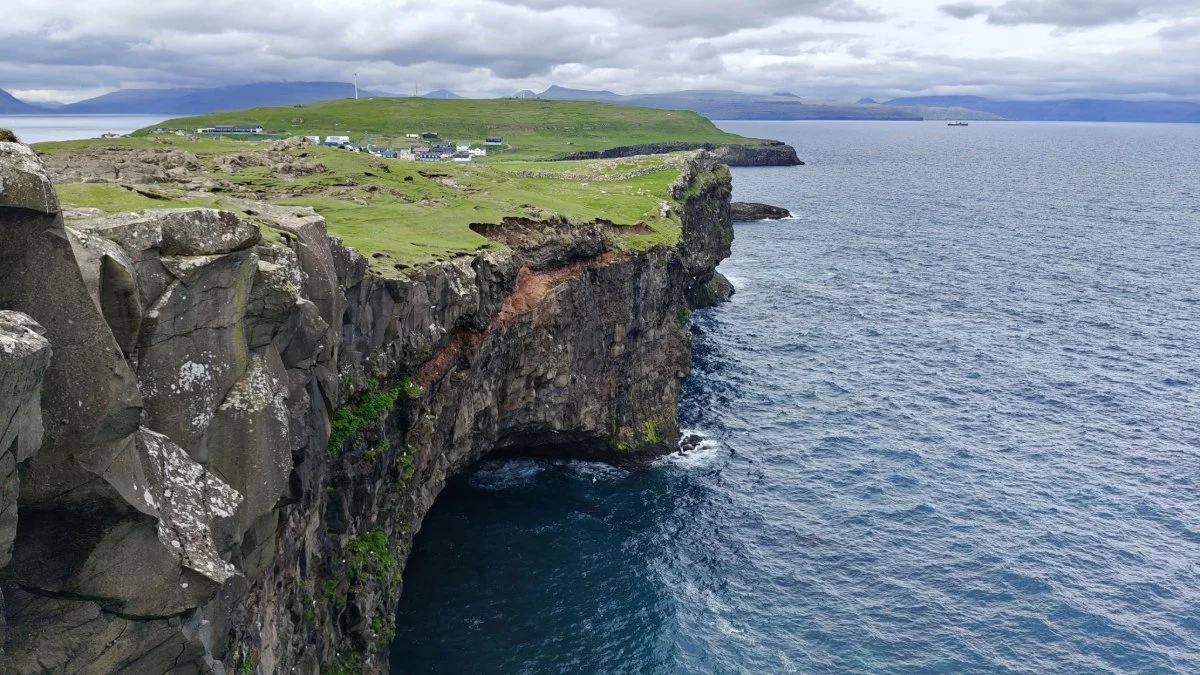
The northern part of Nólsoy. (Photo: Folke)
Next steps
The Northern Futures Hub will continue to convene conversations, prototype ideas, and share learnings across partner communities. If you’d like to follow our work, or collaborate, find more information about the project here.
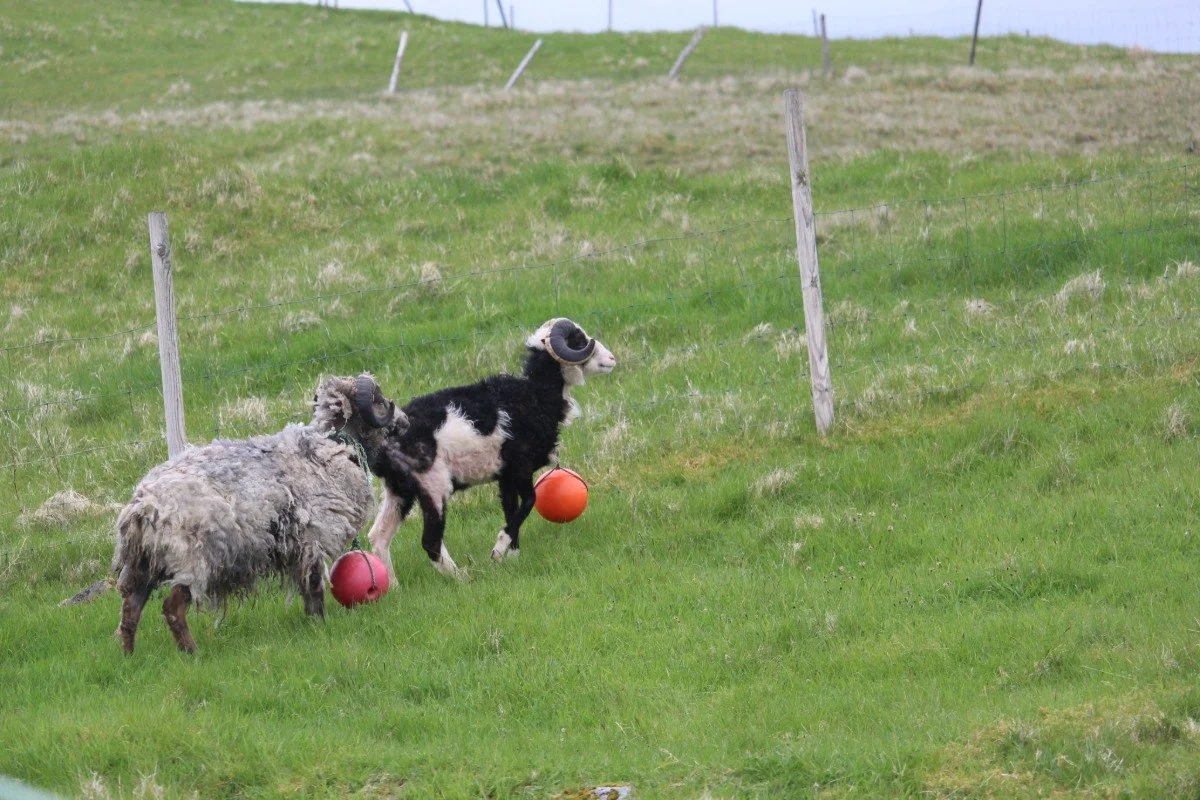
Thanks to everyone who joined us in the Faroe Islands! Your curiosity and care helped make the trip a meaningful step toward imagining better futures for the North Atlantic. We would also like to thank our partners and co-fascilitators, as well as NORA for making the project possible.
All photos: Folke / folkehub.no
